



Retail
Commerce
Intelligence
Infrastructure
 Why institutions choose Box
Keep the brand, records, rails, and merchant relationship.
Why institutions choose Box
Keep the brand, records, rails, and merchant relationship.
Start here
By merchant activity
By deployment
 See it running
OlivePay licensed Box. The tills are already in the field.
See it running
OlivePay licensed Box. The tills are already in the field.
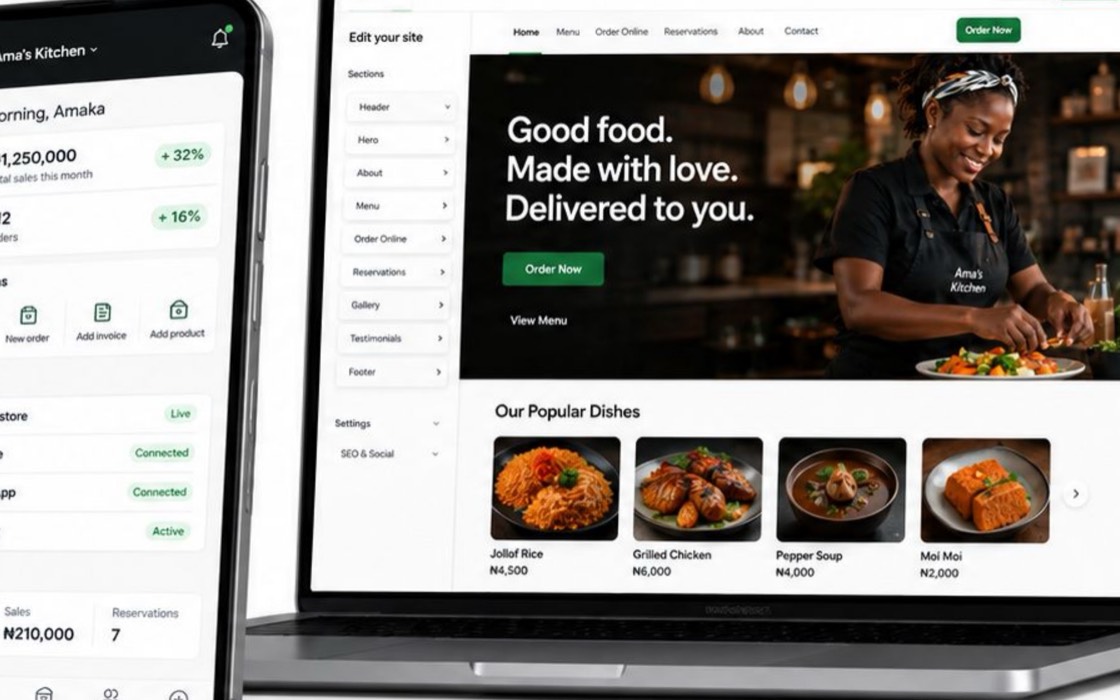
Describe the business and let Build create the brand, pages, catalogue, checkout, till, and operating configuration in one editable workspace.
A bakery in Yaba with collection, delivery, card, and transfer.
I prepared the catalogue, checkout, website, and staff roles for review.
PromptDescribe the product and keep refining it through conversation.
CanvasPreview every surface and edit the generated result directly.
Commerce runtimePublish onto real catalogue, order, and customer records.
Connected from the first draft
Start from a prompt or pattern
Describe the product from scratch or begin with a proven commerce shape, then let the builder assemble a first working version.
Retail
Food
Services
Built around the real business
Build turns the merchant brief into a connected experience for customers and staff, then leaves every generated decision open for review.

AI starts the work
Build shortens the distance from an idea to a working business. It does not hide the catalogue, pages, settings, or permissions behind a generated layer. Every result remains visible and editable.
One building workspace
Natural language brief
Name the business, its customers, what they should be able to do, the channels it needs, and how the brand should feel.
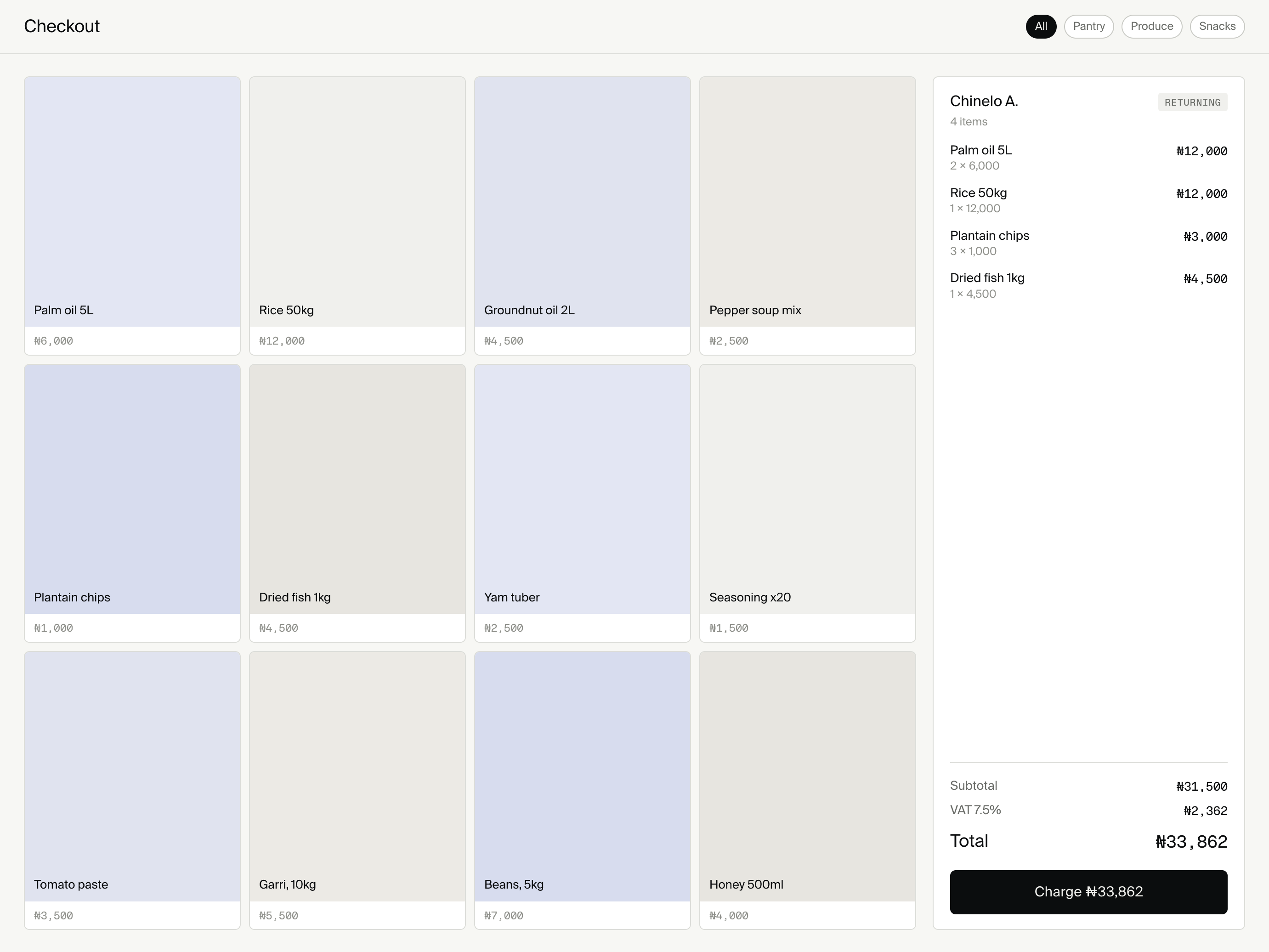
Working generation
Build creates connected pages, catalogue data, checkout rules, till configuration, and permissions on Commerce Engine.
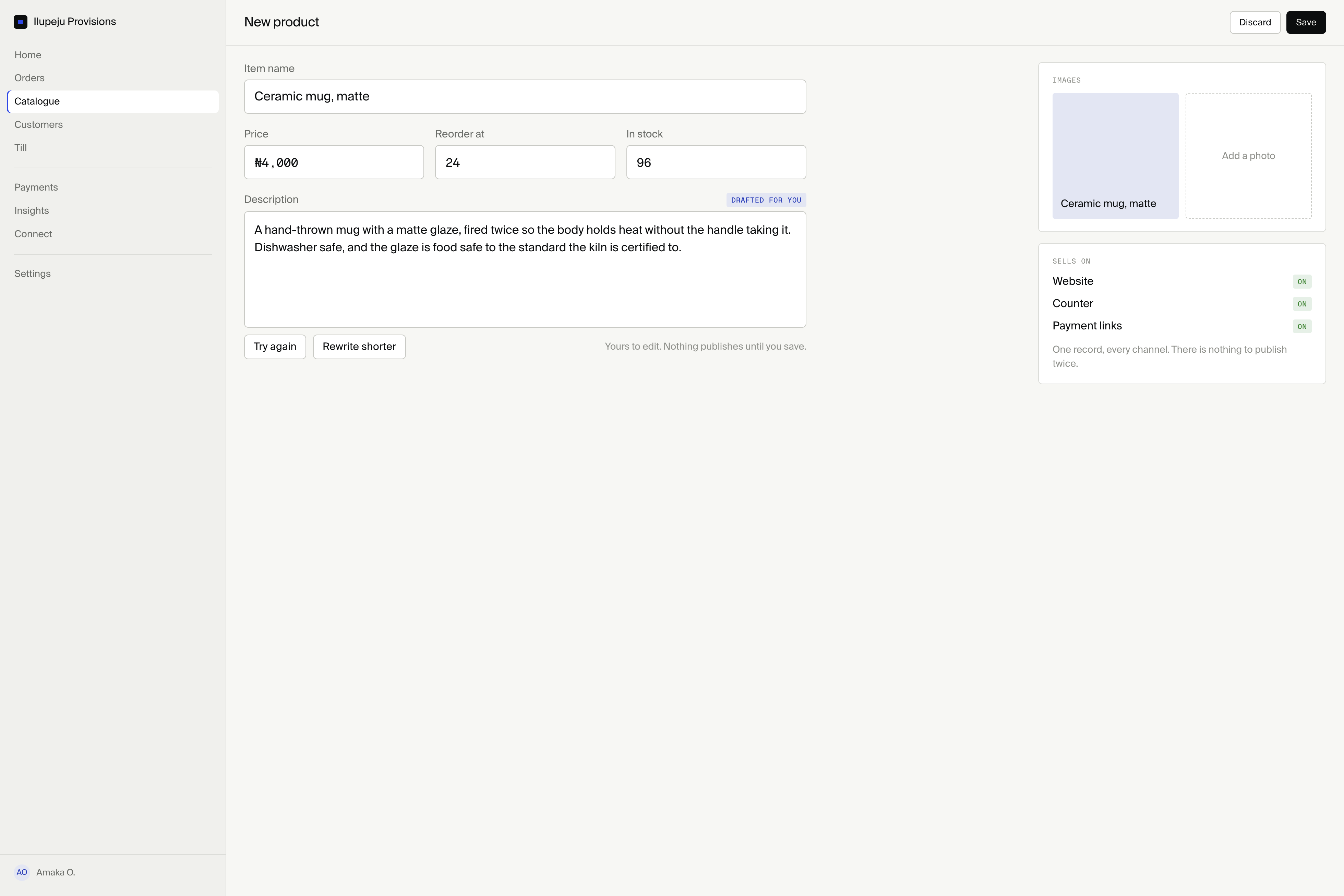
Prompt and visual control
Ask for a broader change through conversation, or select generated content and adjust it directly in the workspace.
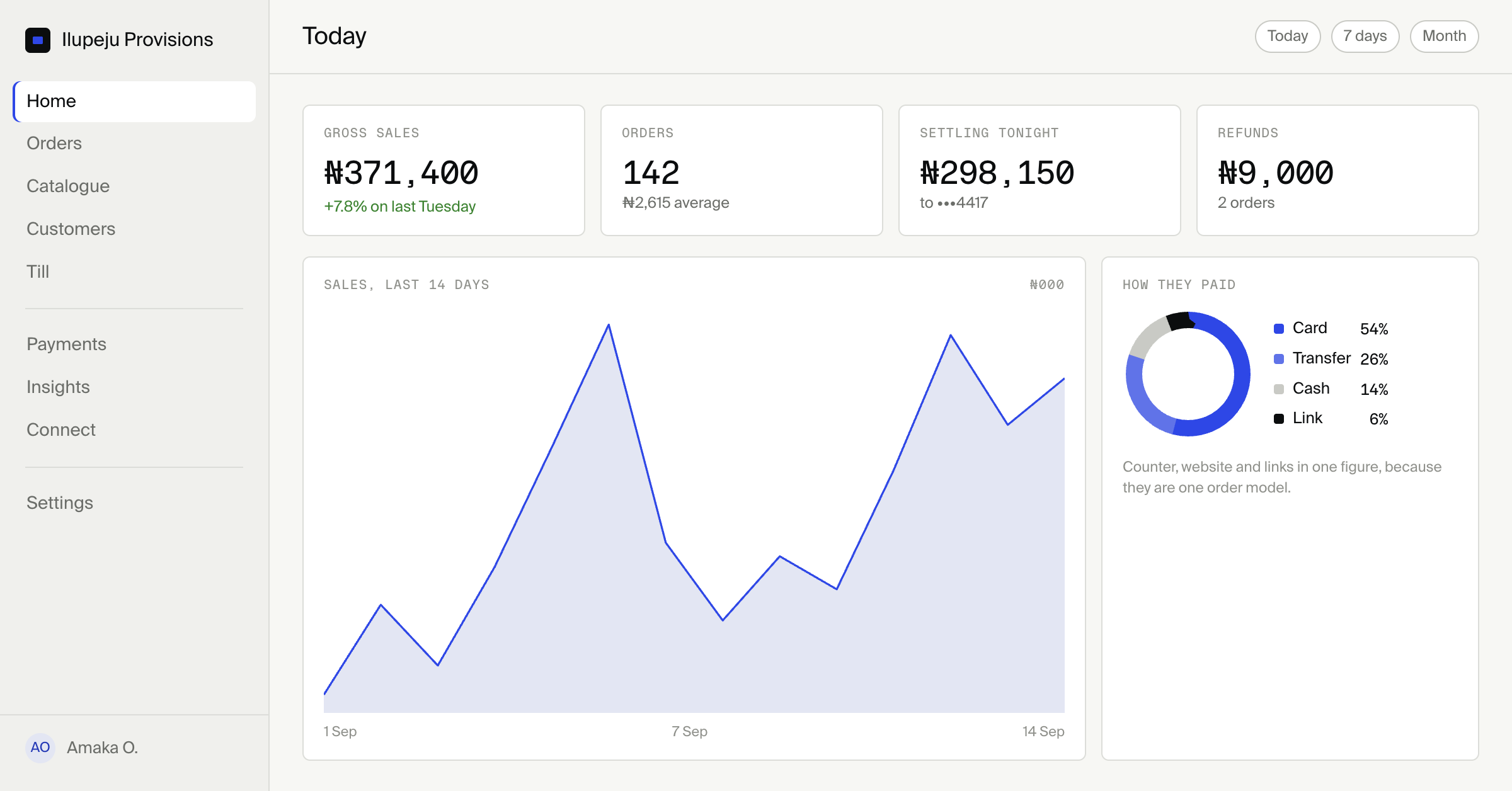
Responsive preview
Review the experience at different sizes, approve the version, and publish through the normal platform release path.
One brand, every surface
Build creates a reusable visual language and applies it across the merchant website, checkout, and till. Change the shared foundation or refine one surface where its job is different.
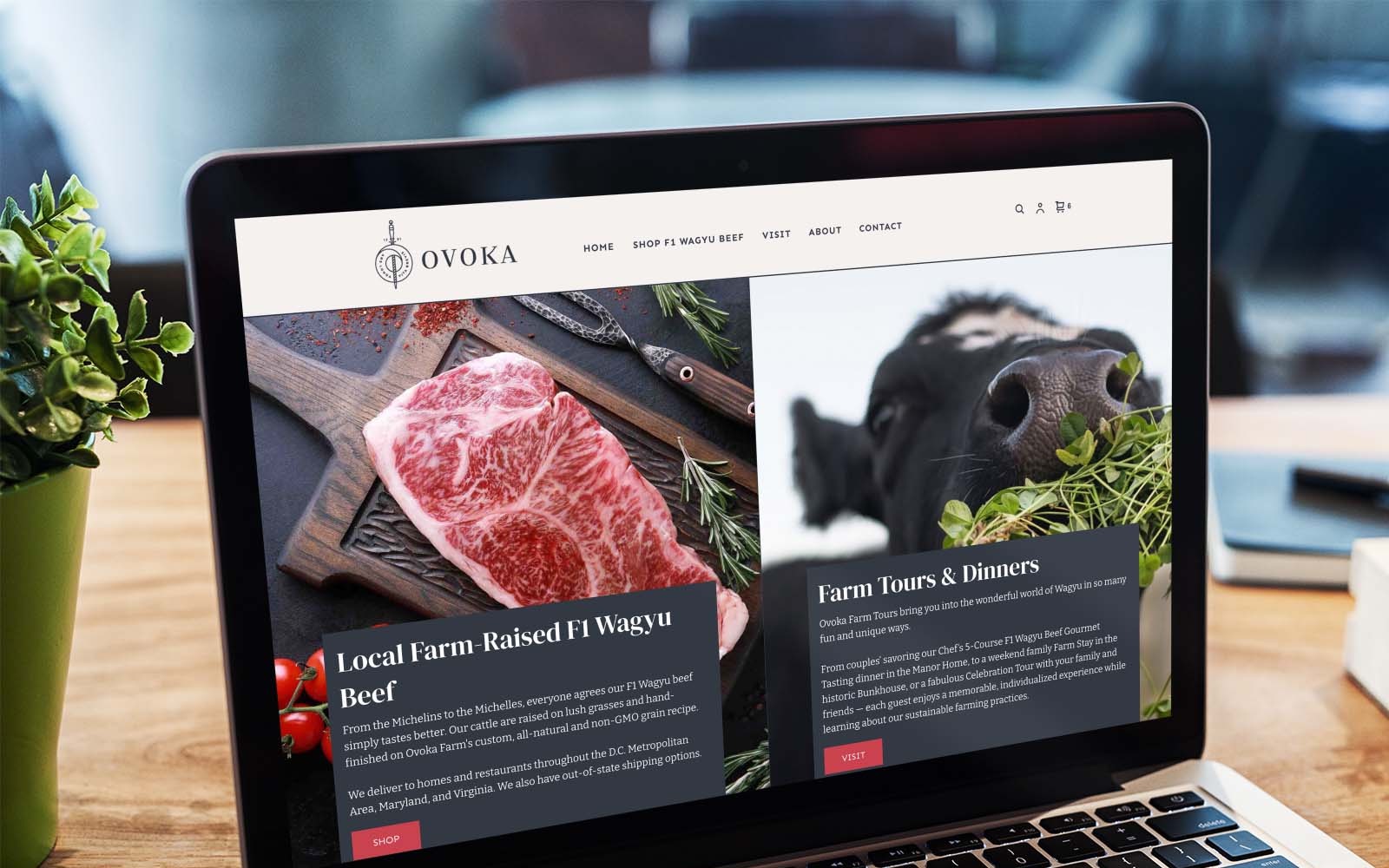
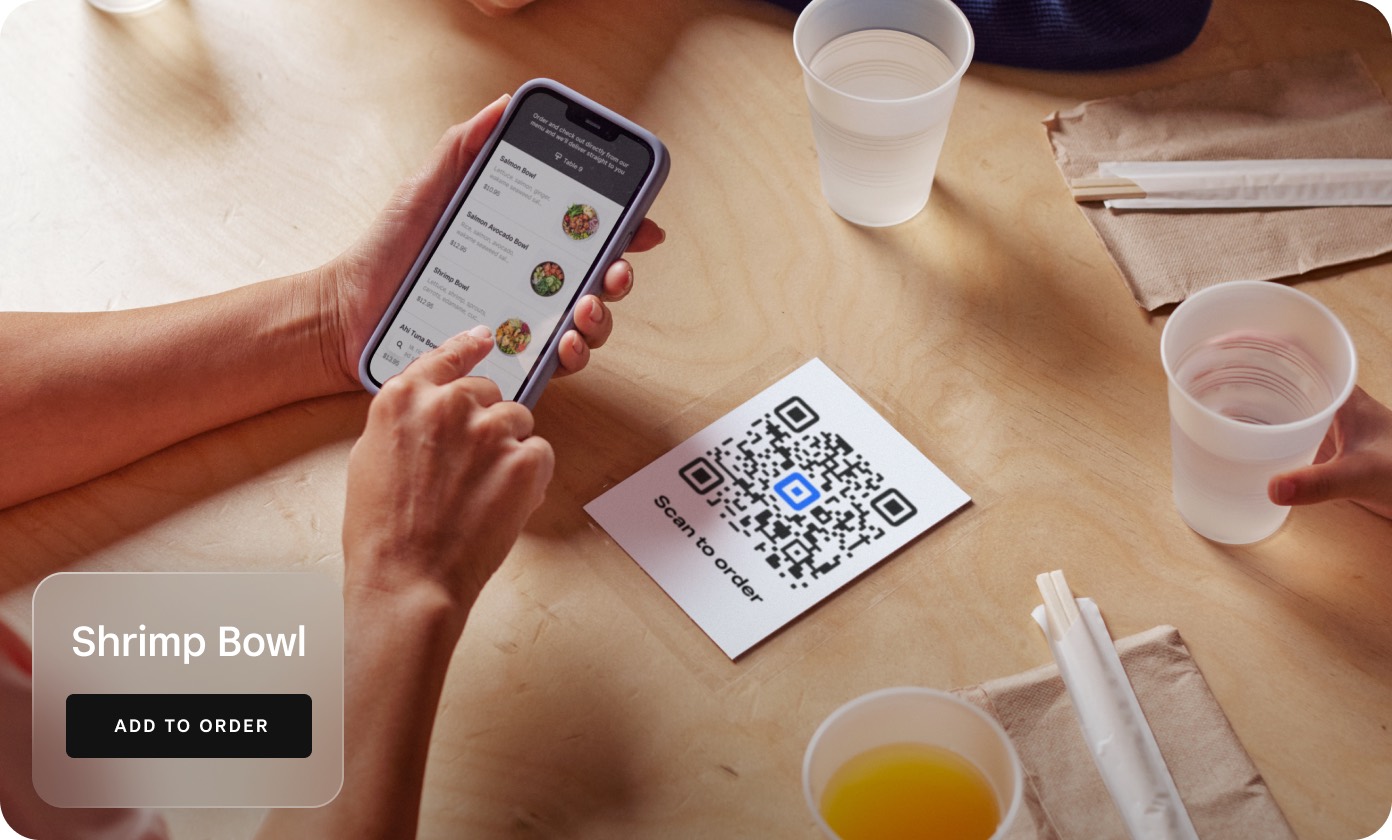
Brand foundation
From page to operation
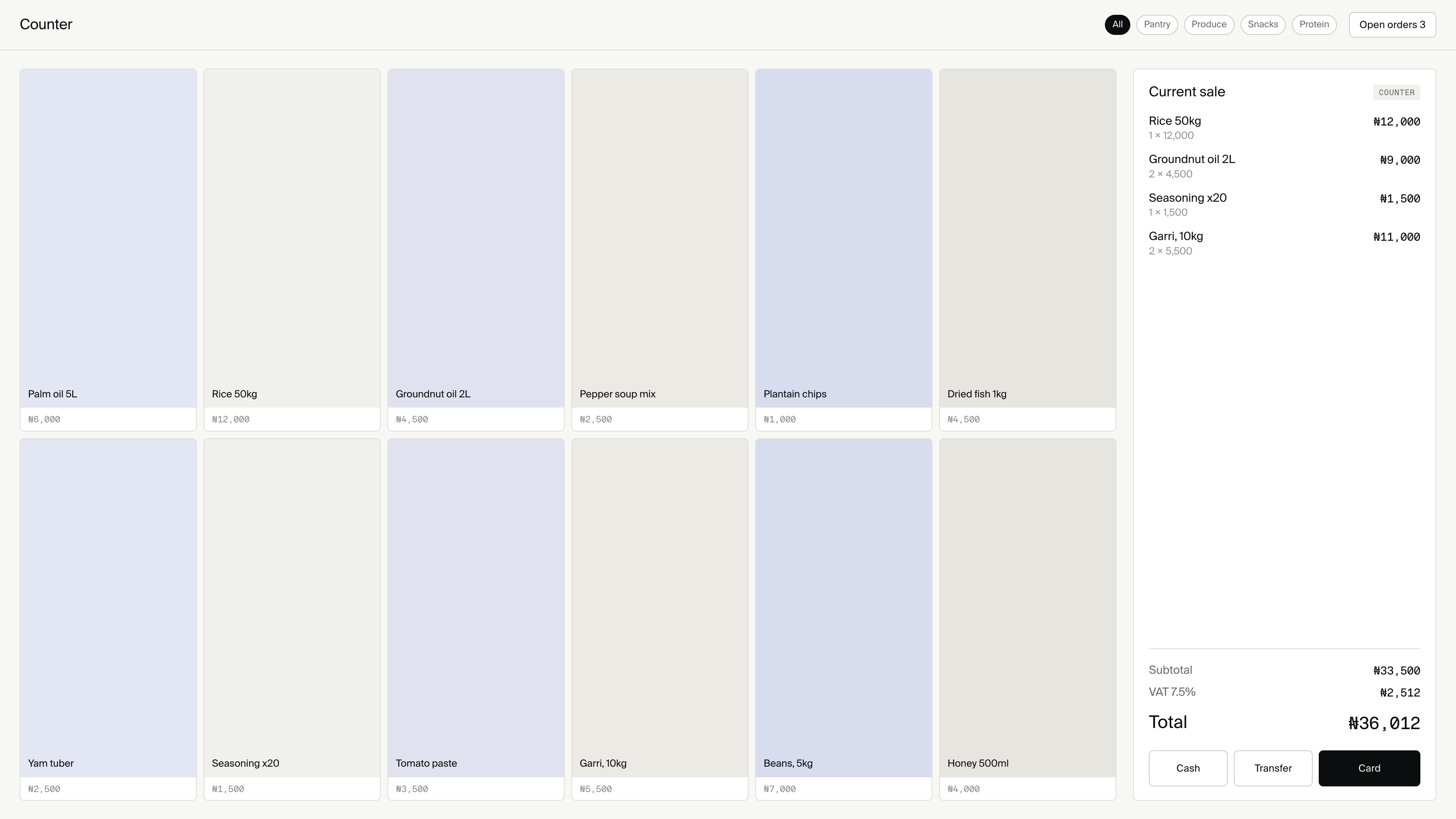
Products, prices, customer context, collection, delivery, and installed payment methods are real engine configuration from the first preview.

Build proposes the fulfilment states, location rules, opening hours, and staff access needed to complete what the customer bought.
The second build matters more
Orders, customers, and stock belong to Commerce Engine, not to the builder. A merchant can replace structure and presentation later while live trading history remains intact.
See the engine underneathClear responsibility
Nothing is published until the merchant has reviewed the proposed business state.
Identity, sanctions, risk appetite, and permission to trade remain institution decisions.
Build can configure only the packages installed for the deployment. It cannot invent missing capability.
No. It writes editable configuration used by Website, Merchant Console, Retail Rails, and Commerce Engine.
Yes. Generated values become ordinary product state and can be edited directly in Merchant Console.
No. Orders, customers, payments, and stock remain owned by Commerce Engine.
No. The institution owns verification, approval, and every regulated decision.